
How Better Pallet Storage Can Improve Warehouse Efficiency?
Warehouses are under constant pressure to store more products without making day-to-day operations harder. When stock is poorly organised, valuable floor space can quickly disappear, aisles become difficult to navigate and employees spend more time locating goods.
A well-planned storage system can make a significant difference. For businesses handling palletised products, pallet racking provides a practical way to use the vertical space within a warehouse while keeping stock accessible.
Why Warehouse Layout Matters?
Warehouse efficiency is not simply about having more storage. The layout needs to support the way products enter, move through and leave the building.
Consider how goods are received, where pallets are temporarily stored, how frequently particular products are accessed and what equipment employees use to move them.
A suitable pallet racking system can be planned around these requirements rather than treating every warehouse in the same way.
The result can be a clearer working environment where storage locations are easier to identify and movement through the warehouse is more predictable.
Make Better Use of Vertical Space
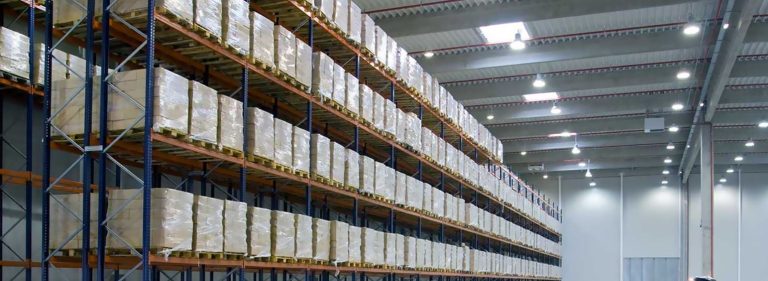
One of the biggest advantages of pallet racking is its ability to use height as well as floor area.
Instead of spreading stock across the warehouse floor, multiple storage levels can create additional capacity within the same footprint. This can be particularly useful where expanding the building is not practical.
However, adding more levels is not simply a case of installing taller frames. A proper design should take account of load requirements, available height, aisle arrangements, handling equipment and the products being stored.
Choose a System Around Your Stock
Different businesses have different storage patterns.
A warehouse holding a wide variety of products may require a flexible arrangement where beam levels can be adjusted as inventory changes. A business storing large quantities of similar products may have different priorities.
This is why professional warehouse pallet racking design should begin with understanding the operation.
Factors worth considering include:
● Pallet dimensions
● Product weight
● Stock turnover
● Forklift requirements
● Available ceiling height
● Aisle widths
● Future expansion
● Required storage density
RSLNI provides adjustable pallet racking alongside other systems designed for different warehouse requirements.
Safety Should Be Part of the Design
Storage capacity should never be considered separately from safety.
Racking needs to be appropriate for the loads being stored and the way goods are handled. A warehouse where forklifts operate between aisles also needs sufficient clearance and protection against accidental impact.
Professional installation, appropriate load information and regular inspections can all contribute to safer warehouse operations.
Businesses should also make sure their storage arrangements are managed in accordance with relevant workplace and equipment safety requirements.
Think About Future Changes
A warehouse that works today may need to operate differently in the future.
Stock ranges can expand, product sizes can change and order volumes can increase. A rigid storage arrangement may therefore become inefficient surprisingly quickly.
Adjustable systems can offer useful flexibility because storage levels and configurations can be changed as requirements develop.
This is particularly relevant for growing businesses that want to avoid completely redesigning their warehouse every time their inventory changes.
Professional Planning Can Make the Difference
Good warehouse storage starts before the first frame is installed.
A site survey can identify available space and operational constraints, while a considered design can help determine where racking should be positioned and how it should interact with existing workflows.
RSLNI provides design, supply, installation and ongoing support for pallet racking projects across the UK and Ireland.
FAQs
1. How can pallet racking improve warehouse efficiency?
Pallet racking can help businesses make better use of available floor and vertical space while keeping palletised stock organised and accessible. A well-planned system can also support clearer aisles, easier stock identification and more efficient movement around the warehouse.
2. What should be considered when choosing a pallet racking system?
The right system depends on factors such as pallet dimensions, load weights, stock turnover, forklift requirements, available building height, aisle widths and future storage needs. Designing the system around these requirements can help ensure the racking supports the warehouse’s day-to-day operations.
3. Is pallet racking suitable for a growing warehouse?
Yes. Adjustable pallet racking can provide flexibility as storage requirements change. Beam levels and configurations can often be adapted to accommodate different products and changing inventory, making it a practical option for businesses planning for future growth.
Final Thoughts
The most effective warehouse is not necessarily the one with the greatest amount of racking. It is the one where storage capacity, accessibility, safety and workflow work together.For businesses reviewing their current setup, pallet racking installation should therefore be approached as part of a wider warehouse planning exercise rather than simply a product purchase.