Mezzanine Flooring: A Complete Guide for UK & Ireland Businesses
Warehouse space is expensive. Relocating is disruptive. Expanding outward is not always possible.
Mezzanine flooring offers a practical, cost effective way to maximise unused vertical space and optimize your existing space within existing buildings across the UK and Ireland.
In this expert guide, we explain:
- What mezzanine flooring is
- The different types available
- Key design considerations
- Compliance requirements in the UK & Ireland
- How to choose the right system for your business
Mezzanine flooring helps businesses gain more space without the need for moving premises or costly extensions.
If you are considering mezzanine flooring for a warehouse, retail unit or industrial facility, this guide will help you make an informed decision.
What Is Mezzanine Flooring?
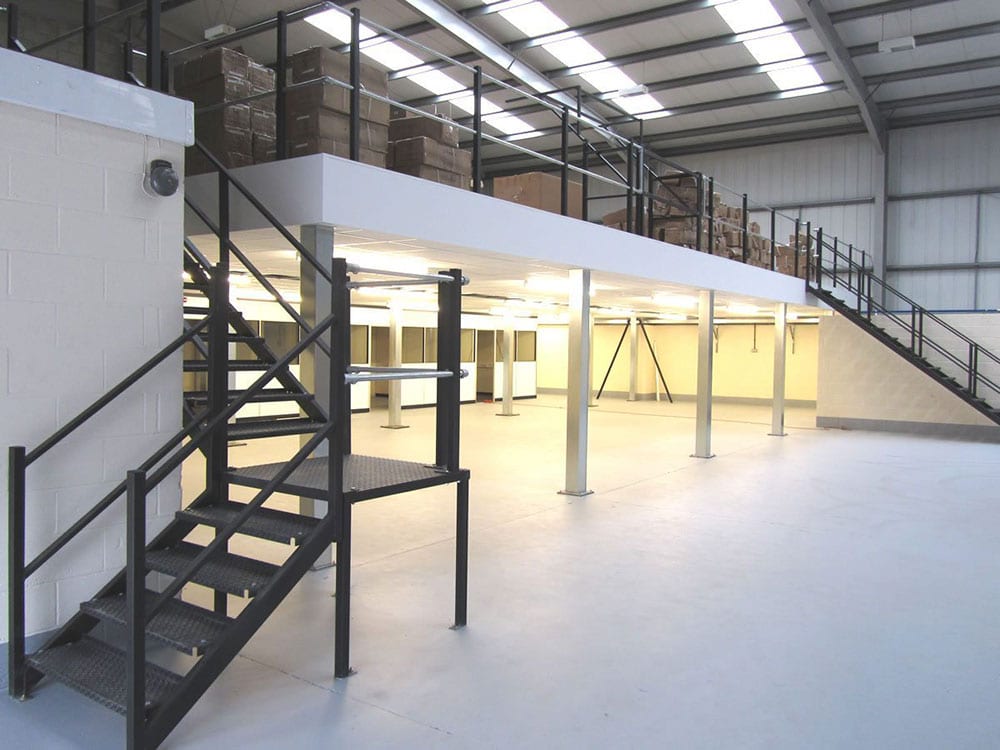
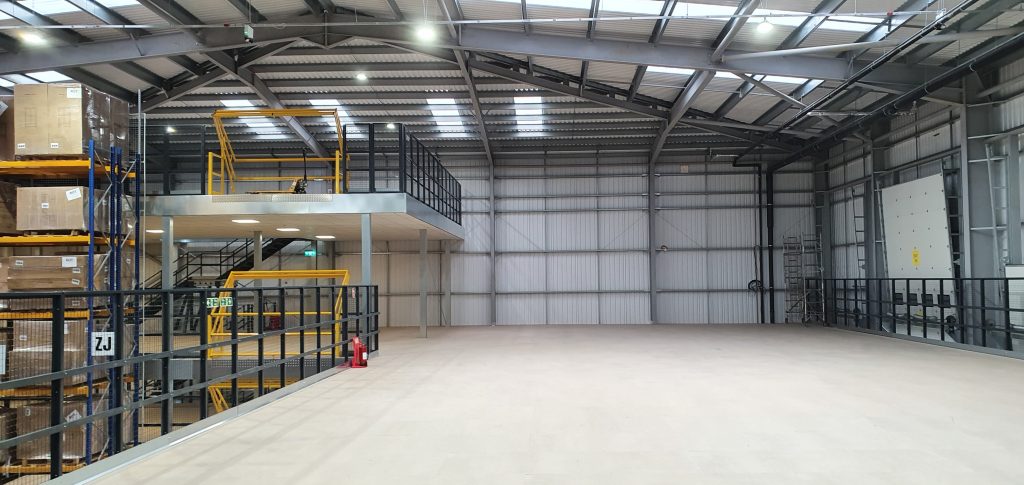
Mezzanine flooring is a raised intermediate floor installed between the main floors of a building. It creates additional usable space without altering the building’s footprint.
In warehouses and industrial units across the UK and Ireland, mezzanine flooring is commonly used for:
- Storage expansion
- Picking and packing areas
- Office space installation
- Production areas
- Retail display levels
It is a structural steel platform system that can be customised to meet load requirements, layout constraints and operational needs. Stairs are commonly integrated to provide safe and convenient access to the mezzanine level.
Types of Mezzanine Flooring
Not all mezzanine flooring systems are the same. The correct type depends on load capacity, building layout and intended use. It is important to select a reputable provider to ensure you choose the mezzanine flooring system that best fits your requirements.
1. Free Standing Mezzanine Flooring
This is the most common type in warehouses.
It is supported by its own steel columns and does not rely on the existing building structure. This makes it suitable for:
- Distribution centres
- Industrial units
- Storage facilities
- Manufacturing sites
Benefits:
- Fully relocatable
- Can be moved or adapted to a new location as your business needs change
- Flexible layout design
- Suitable for high load capacities
2. Rack Supported Mezzanine Flooring
This system integrates directly with pallet racking.
The racking structure supports the upper floor, making it ideal for high density storage environments.
Best suited for:
- Warehouses with existing pallet racking
- Businesses needing multi tier storage systems
- Fulfilment centres
Benefits:
- Maximises storage efficiency
- Reduces structural steel costs
- Ideal for growing operations
3. Multi Tier Mezzanine Flooring
Multi tier systems create two or more raised levels.
These are often used in:
- E commerce fulfilment centres
- Parts storage facilities
- High volume picking environments
Multi tier mezzanine flooring is widely used across sectors such as e-commerce, manufacturing, and logistics, demonstrating its versatility for different operational needs.
Benefits:
- Maximum vertical space utilisation
- Optimised picking routes
- Improved operational efficiency
4. Retail Mezzanine Flooring
Retail mezzanines are designed with aesthetics and customer access in mind.
By providing additional retail space and easier access, these systems enhance the shopping experience for customers, making it more convenient and enjoyable.
They are commonly installed in:
- Showrooms
- Trade counters
- Garden centres
- Large format retail stores
These systems must meet strict fire safety and building regulations across the UK and Ireland.
Key Design Considerations
Choosing the right mezzanine flooring system requires careful planning. Several factors, such as storage needs, workflow efficiency, and operational costs, should be evaluated to ensure the best return on investment.
Load Requirements
You must determine:
- Uniformly distributed load
- Point load requirements
- Intended usage
Storage mezzanines require different specifications compared to office installations.
Fire Safety Compliance
In the UK and Ireland, mezzanine flooring must comply with building regulations, including:
- Fire rating requirements
- Emergency lighting
- Smoke detection
- Fire protection systems
Depending on size and usage, you may require:
- 30 or 60 minute fire rated structures
- Fire rated ceilings
- Sprinkler system integration
Always consult experienced mezzanine flooring specialists to ensure compliance.
Access Points
Access options include:
- Staircases
- Goods lifts
- Pallet gates
- Conveyor integration
Design should prioritise safety and workflow efficiency.
Building Regulations Approval
Most mezzanine flooring installations require building regulations approval in the UK and Ireland. Structural calculations and drawings are typically submitted for approval before installation begins.
Mezzanine Floor Materials
Choosing the right materials is crucial when designing a mezzanine floor for your business. The most common choice is steel, renowned for its strength, durability, and cost effective nature. Steel mezzanines are designed to handle heavy loads and provide a robust structural solution, making them ideal for warehouses, manufacturing, and commercial environments where additional space and safety are priorities.
Aluminum mezzanines offer a lightweight alternative, particularly suited to environments where corrosion resistance is important or where the mezzanine may need to be relocated or reconfigured. While not as strong as steel, aluminum can be a practical option for lighter loads and specific commercial applications.
Wooden mezzanine floors are often selected for retail and office settings, where aesthetics and versatility are key. Wood can create a warm, inviting environment and is adaptable to a range of interior designs, though it is generally used for lighter loads.
No matter the material, all mezzanine floors are constructed with quality and safety in mind. High-grade materials ensure that the mezzanine is durable, structurally sound, and designed to meet the specific needs of your business. By selecting the right materials, you can create additional space that is both functional and cost effective, supporting your operations for years to come.
Benefits of Mezzanine Flooring for UK & Ireland Businesses
Cost Effective Expansion
Compared to relocating or constructing extensions, mezzanine flooring provides a far more economical solution.
Minimal Business Disruption
Installation can often be completed while operations continue.
Increased Property Value
Well designed mezzanine flooring systems can enhance commercial property value.
Scalable Solutions
As your business grows, mezzanine systems can often be extended or reconfigured.
Industries That Benefit Most
Across the UK and Ireland, mezzanine flooring is commonly used in:
- Warehousing and distribution
- E commerce
- Manufacturing
- Automotive parts storage
- Retail and trade counters
- Logistics hubs
Mezzanine Floor Maintenance
Maintaining your mezzanine floor is essential for ensuring ongoing safety, efficiency, and productivity within your business. Regular inspections should be carried out to check the condition of key components such as staircases, pallet gates, and welfare facilities. Look for any signs of wear, damage, or loose fittings that could compromise the structure or safety of the mezzanine.
In addition to visual inspections, it’s important to keep the mezzanine floor and surrounding areas clean and free from debris. This not only helps maintain a safe working environment but also ensures that fire protection systems and emergency exits remain accessible at all times.
Fire protection features, including alarms and sprinkler systems, should be tested regularly to guarantee they are fully operational. By implementing a scheduled maintenance plan, businesses can quickly identify and address potential issues, reducing the risk of costly downtime and ensuring compliance with health and safety regulations.
Prioritizing mezzanine floor maintenance helps create an efficient, safe, and productive environment for your operations, supporting the long-term success of your business.
Mezzanine Floor Accessories
To maximize the functionality and safety of your mezzanine level, a range of accessories can be incorporated into the design. Staircases are essential for providing safe and convenient access to additional levels, while pallet gates allow for the secure movement of goods between floors, reducing the risk of accidents during loading and unloading.
Welfare facilities, such as toilets and canteens, can be integrated into the mezzanine floor to enhance the working environment and support staff wellbeing. Fire protection systems—including fire alarms, sprinkler systems, and fire-rated partitions—are critical for safeguarding both people and equipment, ensuring your mezzanine meets all relevant safety standards.
Mezzanine floor accessories can also be tailored to create dedicated spaces such as meeting rooms, offices, or extra storage areas, depending on your business requirements. By selecting the right combination of accessories, you can design a mezzanine floor that not only increases space but also improves workflow, safety, and overall efficiency within your premises.
Why Work with Racking & Shelving?
When investing in mezzanine flooring, expertise matters.
Racking & Shelving provides:
- Full site surveys across the UK & Ireland, with the availability of a site survey to assess your specific requirements
- Structural design and calculations
- Building regulations guidance
- Supply and professional installation
- Project management from concept to completion
Racking & Shelving is committed to providing timely delivery and maintaining the highest standards of excellence in every project.
With industry experience and a deep understanding of warehouse optimisation, Racking & Shelving’s expert team takes a collaborative approach to designing and installing mezzanine flooring systems tailored to operational requirements and compliance standards.
Ready to discuss your mezzanine flooring needs? Contact our team today to discuss your requirements, or use our online contact form to make an inquiry or request a quote.