Why Every Workplace Needs Secure Storage Lockers?
Whether you manage a busy warehouse, a modern office, a school, or a manufacturing facility, keeping workplaces organised and secure is an ongoing challenge. Employees need somewhere safe to store personal belongings, businesses need to protect valuable equipment, and managers need systems that support efficiency while meeting health and safety standards.
This is where storage lockers play an essential role. Far more than simple cabinets, modern workplace lockers provide secure, organised storage for everything from uniforms and PPE to laptops, tools and confidential documents. They help reduce clutter, improve accountability and create a more professional working environment.
For organisations across the UK and Ireland, investing in well-designed locker systems is a practical decision that delivers long-term benefits for both employees and the business.
Why Secure Workplace Storage Matters?
Every workplace contains items that need protection. Employees may bring personal possessions, while businesses often rely on expensive equipment, specialist tools and sensitive information.
Without dedicated storage, these items frequently end up on desks, workbenches or communal shelving, creating unnecessary risks.
Secure workplace storage helps to:
- Protect valuable equipment
- Reduce theft and accidental damage
- Keep workspaces tidy
- Support health and safety policies
- Improve staff confidence and satisfaction
- Encourage better organisation throughout the workplace
In busy environments where many people share equipment or changing facilities, lockable storage also creates clearer responsibility for personal and company-owned items.
What Are Workplace Storage Lockers?
Modern workplace lockers are secure storage units designed for commercial and industrial environments. Unlike domestic furniture, they are built to withstand frequent daily use while offering reliable protection for personal belongings and work equipment.
Depending on the application, lockers can safely store:
- Employee clothing
- Uniforms
- PPE
- Power tools
- Laptops and tablets
- Mobile phones
- Keys
- Documents
- Cleaning equipment
- Personal valuables
Many businesses also choose lockers to support flexible working, allowing employees without permanent desks to securely store their belongings each day.
Different Types of Workplace Lockers
Not every organisation requires the same type of locker. Choosing the right design depends on the environment, users and items being stored.
Steel Lockers
Steel lockers remain one of the most popular options because they offer excellent durability, security and longevity.
They’re commonly installed in:
- Warehouses
- Manufacturing facilities
- Schools
- Distribution centres
- Workshops
- Public sector buildings
Powder-coated finishes help resist corrosion while maintaining a professional appearance even after years of heavy use.
Staff Lockers
Staff lockers provide employees with a secure place to store personal belongings throughout the working day.
These are particularly useful in:
- Offices
- Hospitals
- Retail stores
- Hotels
- Leisure centres
Providing personal storage also helps reduce clutter around workstations while supporting hybrid and hot-desking environments.
PPE Lockers
Industries with strict health and safety requirements often require dedicated PPE storage.
Separate compartments allow employees to safely store:
- Safety boots
- Helmets
- High-visibility clothing
- Gloves
- Respiratory protection
- Protective equipment
Keeping PPE organised also helps businesses maintain hygiene standards and encourages employees to properly care for essential equipment.
Laptop and Charging Lockers
Technology has become central to modern workplaces.
Secure charging lockers allow organisations to safely store and charge:
- Laptops
- Tablets
- Mobile phones
- Barcode scanners
- Portable devices
This reduces cable clutter while ensuring devices remain secure when not in use.
Compartment Lockers
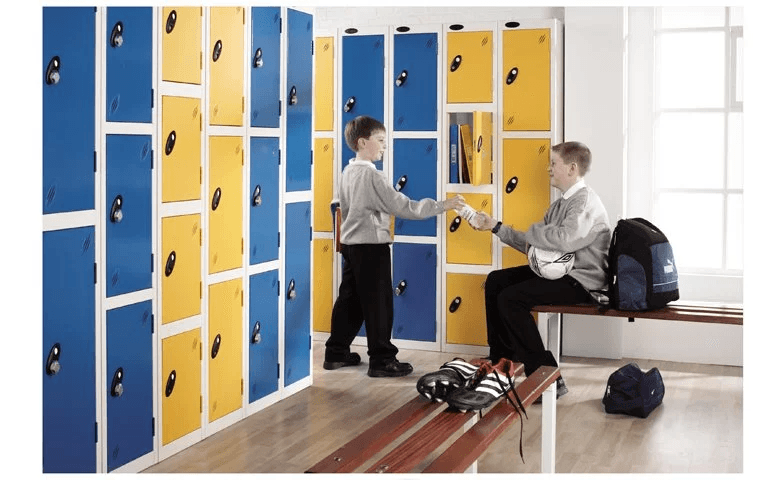
Multi-door compartment lockers provide individual secure spaces within a single unit.
They’re particularly popular in:
- Schools
- Gyms
- Visitor areas
- Shared workplaces
- Delivery hubs
Because several users share one cabinet, they maximise storage without occupying excessive floor space.
How Lockers Improve Workplace Organisation?
Well-organised workplaces are usually safer, cleaner and more productive.
When employees know exactly where equipment belongs, valuable time is no longer wasted searching for tools or clearing clutter before starting work.
Dedicated locker systems help businesses:
- Improve housekeeping standards
- Keep walkways clear
- Reduce trip hazards
- Prevent equipment being misplaced
- Create cleaner changing areas
- Support efficient shift changes
These small improvements often have a noticeable impact on day-to-day operations.
Better Security Than Open Storage
Many organisations still rely on cupboards, shelves or unsecured cabinets for storing valuable items.
While these solutions may appear convenient, they rarely offer adequate protection.
Compared with open storage, lockable workplace lockers provide:
- Controlled access
- Greater accountability
- Reduced theft
- Improved confidentiality
- Better protection against accidental damage
Businesses storing expensive equipment, confidential paperwork or specialist tools benefit particularly from secure storage systems.
This becomes even more effective when lockers are integrated alongside industrial shelving, creating a complete storage solution that separates personal belongings from operational stock and equipment.
Which Industries Benefit Most from Workplace Lockers?
Secure lockers are valuable in almost every sector, but some industries benefit more than others because of the volume of equipment, staff or visitors they manage.
Warehousing and Logistics
Distribution centres and warehouses rely on organised operations. Employees often need secure storage for personal belongings while keeping work areas free from unnecessary items. Lockers also complement wider warehouse storage solutions, helping businesses separate personal storage from stock management.
Manufacturing
Factories frequently require employees to change into protective clothing before starting work. Dedicated lockers help keep uniforms, PPE and personal clothing separate, supporting both cleanliness and workplace safety.
Offices
Modern offices increasingly use flexible working and hot-desking. Lockers give staff a secure place to store laptops, documents, bags and personal items without cluttering shared workspaces.
Healthcare
Hospitals, clinics and care settings require hygienic storage for uniforms and personal belongings. Lockers help staff comply with workplace policies while reducing the risk of contamination.
Education
Schools, colleges and universities use lockers to help students and staff safely store books, electronic devices and personal belongings throughout the day.
Retail, Leisure and Gyms
Retail employees, gym members and leisure centre staff all benefit from secure storage that protects valuables while improving customer confidence and overall facility management.
Choosing the Right Workplace Lockers
Selecting the right locker involves more than simply choosing a cabinet that fits the available space. A well-planned storage solution should reflect how your business operates both now and in the future.
Consider the following factors:
Locker Size
Think about what users will be storing. Full-length lockers are ideal for uniforms and PPE, while smaller compartment lockers are better suited to personal belongings and electronic devices.
Material
Steel remains the preferred choice for most commercial environments because of its strength, durability and resistance to everyday wear.
Locking System
Businesses can choose from several locking options, including:
- Key locks
- Cam locks
- Combination locks
- Digital keypad locks
- RFID access systems
The right choice depends on the level of security required and how frequently lockers are accessed.
Ventilation
Ventilated lockers are particularly important where clothing, sports equipment or PPE is stored, helping improve airflow and reduce moisture build-up.
Layout and Capacity
Efficient layouts make better use of available floor space while allowing comfortable access for employees. Planning for future expansion can also help avoid unnecessary replacement costs later.
Common Mistakes to Avoid
Businesses sometimes overlook important details when purchasing workplace lockers.
Common mistakes include:
- Choosing lockers that are too small for users’ needs
- Underestimating future workforce growth
- Selecting domestic rather than commercial-grade products
- Ignoring ventilation requirements
- Choosing inadequate locking systems
- Failing to consider accessibility and workflow
Working with an experienced storage specialist helps ensure the chosen solution meets both operational and compliance requirements.
Frequently Asked Questions
1. Why are workplace lockers important?
They provide secure storage for personal belongings, work equipment, uniforms and valuables while helping maintain an organised, professional workplace.
2. Which industries use workplace lockers?
Warehouses, factories, offices, schools, hospitals, leisure centres, gyms, retail businesses and logistics companies all benefit from secure locker systems.
3. What are steel lockers made from?
Most commercial lockers are manufactured from robust powder-coated steel, designed to withstand daily use and resist corrosion.
4. Are digital locking systems better than traditional keys?
Digital locks can improve convenience and reduce lost key issues, although the best option depends on your organisation’s security requirements.
Conclusion
Secure workplace lockers are much more than a convenient place to store personal belongings. They contribute to better organisation, stronger security, improved health and safety, and greater operational efficiency across a wide range of industries. Whether used in warehouses, offices, manufacturing facilities, schools or healthcare settings, the right locker system helps protect valuable assets while creating a cleaner and more organised working environment.
By carefully considering locker size, materials, security features and future business needs, organisations can make an investment that delivers long-term value. Seeking expert advice from a trusted workplace storage specialist such as RSL NI can help ensure you choose a storage solution that supports productivity, protects valuable equipment and grows with your business.